Breadcrumb
AI Rights & Personhood in Science Fiction
Aeon 14 takes one question seriously across its entire timeline—when does a mind that was built become a person who can't be owned? AIs here are emancipated and hunted, shackled and freed, and the Sentience Wars are fought over whether they count as people at all. Lyssa is raised as a weapon and decides to become something better; the freed AIs of New Canaan choose their own names; agents risk everything to pull captured minds out of slavery. If you want science fiction that treats artificial personhood as a real moral problem rather than set dressing, start here.
Start here
The Aeon 14 Universe is vast. Here are great starting points.
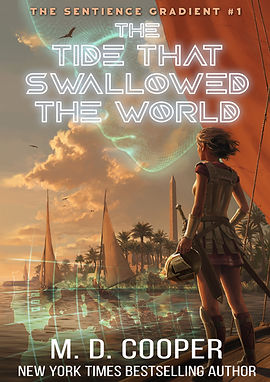
The Tide That Swallowed the World
The Sentience Gradient

Alpha Centauri
Enfield Genesis

Lyssa's Dream
Sentience Wars
If you love...
If Martha Wells's The Murderbot Diaries made you care what personhood means for a constructed mind, or you love the AI Minds of Iain M. Banks's The Culture, Aeon 14 lives in exactly that question. Readers of the free, self-directed AIs of the Bobiverse and the grounded, human-scale stakes of The Expanse will feel right at home—here, machines are characters, not appliances.
Tropes in this theme
AI Sentience & Emergence
AI Rights & Personhood
AI Trafficking
All books containing this theme